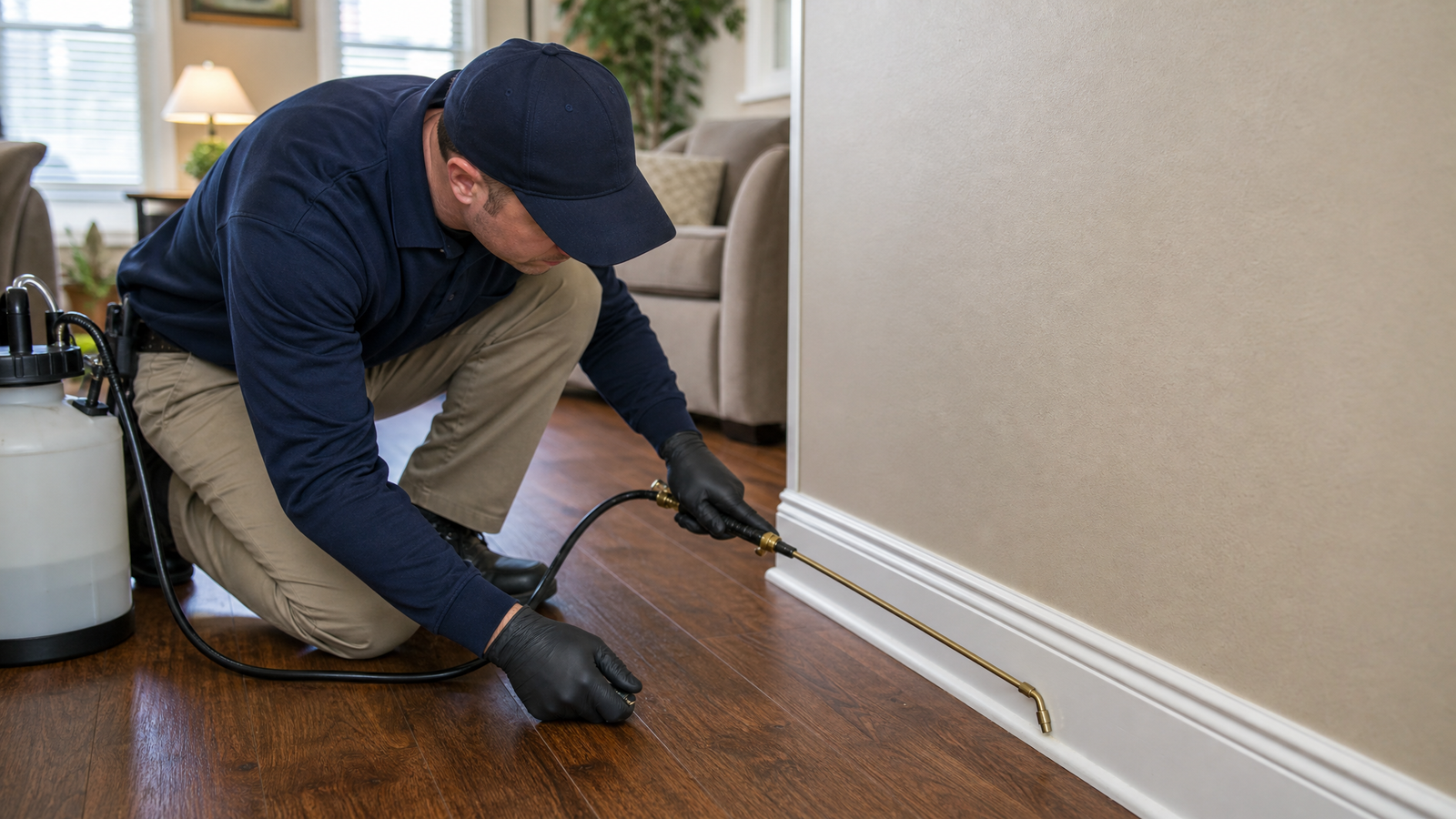
There is no need to use harsh chemicals and toxic sprays to keep your house pest free. Families are becoming more gravitating towards more natural, environmental-friendly pest preventing methods that are environmentally safe, child-safe and pet-safe. The good news? The strategies are sustainable, cost efficient not only effective.
Here, you will get to hear how you can prevent pests in a natural, practical manner, and at the same time keep your home healthy.
What is the rationale behind Preventing Pests in an eco-friendly way?
Conventional pesticides can provide short-term effects, yet theirs can be dangerous in the form of indoor air pollution, skin rashes and extended health effects. Eco-friendly pest management is preventive based on natural repelling and smart home maintenance.
Benefits include:
- Safe for kids and pets
- Environmentally responsible
- Reduces chemical exposure
- Long-term effectiveness
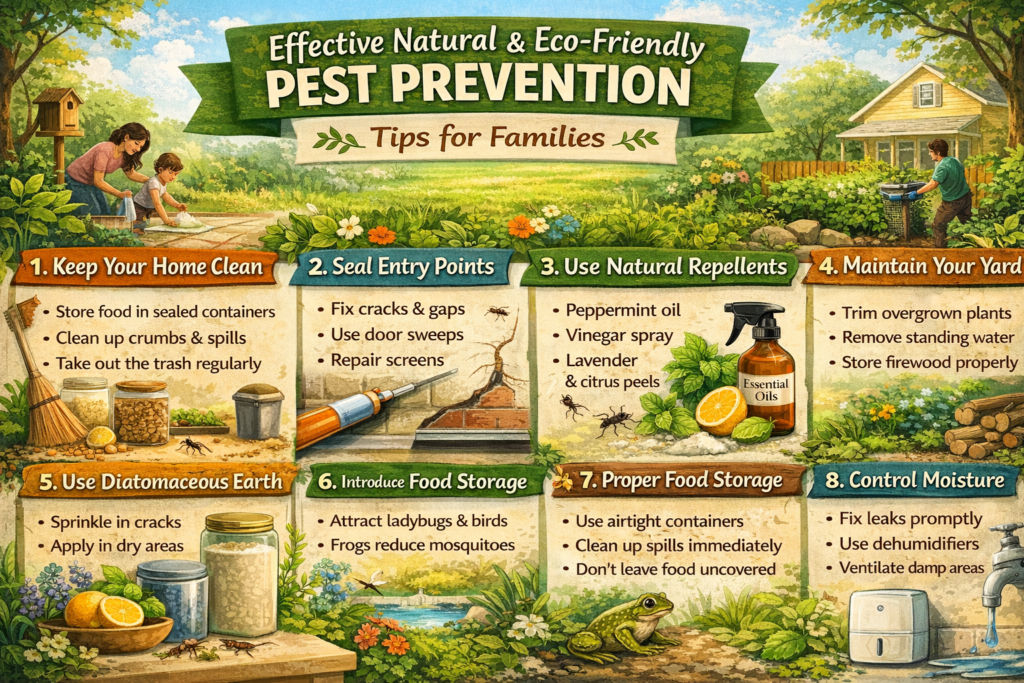
De-Clutter and Clean Your Home
The initial barrier against pests is cleanliness. Crumbs and spills of food and litter provide the perfect environment to insects and rodents.
Simple habits to follow:
- Wipe kitchen surfaces daily
- Put the store food in airtight containers.
- Take out trash regularly
- Have the carpets and corners vacuumed on a weekly basis.
Small modifications can have a great impact on decreasing the attraction of the pests.
Eco-Friendly Pest Prevention Methods Comparison
| Method | Target Pests | How It Works | Eco-Friendly Level | Best Use Area |
|---|---|---|---|---|
| Essential Oils (Peppermint, Lavender) | Ants, spiders, mosquitoes | Strong natural scent repels pests | High | Indoors & entry points |
| Vinegar Spray | Ants | Disrupts scent trails | High | Kitchen, floors |
| Citrus Peels | Insects, ants | Natural deterrent smell | High | Windows, corners |
| Diatomaceous Earth | Cockroaches, fleas | Dehydrates insects | High | Cracks, baseboards |
| Sealing Entry Points | All pests | Blocks entry routes | Very High | Doors, windows |
| Cleanliness & Hygiene | All pests | Removes food sources | Very High | Entire home |
| Proper Food Storage | Rodents, ants | Eliminates attraction | Very High | Kitchen, pantry |
| Moisture Control | Termites, cockroaches | Reduces damp conditions | High | Bathrooms, basements |
| Natural Predators | Garden pests | Biological pest control | High | Outdoor spaces |
| DIY Traps | Flies, cockroaches | Captures pests without chemicals | Medium-High | Kitchen, storage |
Seal Entry Points
Pests normally get inside via cracks, gaps and holes around doors and windows.
What to do:
- Close cracks in the walls and foundations.
- Install door sweeps
- Repair window screens
- Narrow openings around the pipes and vents.
One of the best long-term measures is blocking access.
Use Natural Repellents
Nature provides great deterrents of pests, and they are non-toxic.
Common natural repellents:
- Peppermint oil – keeps away the ants and spiders.
- Lavender – drives away moths and mosquitoes.
- Vinegar spray – deters ants
- Citrus peels – insect repulsive constituents naturally.
Combine necessary oils and water and spray around the entry points.
Maintain Your Yard
The outdoor area is significant in pest control. Uncut grass and stagnant water are the attracting insects.
Eco-friendly yard tips:
- Cut bushes and trees.
- Remove standing water
- Store firewood outside the house.
- Use compost properly
A kept yard minimizes the probability of pest infestation in your house.
Use Natural Predators
It is possible to control the pests using the beneficial insects and animals.
Examples:
- Ladybugs eat aphids
- Birds feed on insects
- There are frogs and lizards that decrease the population of mosquitoes.
The establishment of a balanced ecosystem is useful in maintaining the check of destructive pests.
Use Diatomaceous Earth
Diatomaceous earth is a natural fine powder which dries insects such as ants, fleas, cockroaches.
How to use:
- Add cracks and corners.
- Apply around baseboards
- Use in dry areas only
It is not toxic to humans and lethal to pests.
Proper Food Storage
Pests are mostly attracted by food. This issue can be wiped out by proper storage.
Best practices:
- Use sealed containers
- Do not leave food on the table.
- Clean spills immediately
- Store pet food securely
Infestations should be prevented through consistency.
Control Moisture Levels
There is a large number of pests that are damp.
Reduce moisture by:
- Fixing leaks promptly
- Using dehumidifiers
- Ventilation should be maintained.
- Cleaning drains regularly
Dried out environments are much less attractive to pests.
Use Homemade Traps
Self-made traps are easy to make, efficient and do not use chemicals.
Examples:
- Sugar + baking soda cockroaches.
- Fruit flies at a trap of apple cider vinegar.
- Trap-like traps on crawling insects.
These are solutions that are cost effective and low-maintenance.
Regular Inspections
Prevention is most effective when the problems are identified at an early stage.
Check regularly:
- Under sinks
- Behind appliances
- Attics and basements
- Storage areas
Early diagnosis would save time, finances and anxiety.
For long-term protection, families can rely on Koalaty Services for safe and eco-friendly pest control solutions. Their expert team uses natural methods to eliminate pests while keeping your home environment healthy. Whether it’s prevention or treatment, Koatalay Services ensures effective, family-friendly results you can trust for a cleaner, pest-free living space.
Conclusion
Consistency, awareness and intelligent habits are all that it takes to be eco-friendly pest prevention. A combination of these three elements of cleanliness, natural repelling elements and home maintenance will enable the families to establish a safe and pest free environment devoid of the use of harmful chemicals.
One can make a difference in this world by making little changes today, and this allows a healthier home tomorrow.