Rodents are one of the most household pests and once they invade a home, they multiply at a very quick rate. A lot of the home owners feel that the infestations occur due to a lack of cleanliness which is not the case but access is more often the problem. The first step to permanent prevention of rodents is to understand how they penetrate the building.
This reference is a guide on How Rodents Enter Your Home and How to Stop Them Permanently that relies on simple techniques and aims at preventing entry through entry-way blocking and eliminating the conditions that attract the pests.
The motivation behind rodent intrusion attempts to home.
There are mainly three things that rodents seek and that are food, shelter, and warmness. The changes in the weather, in particular, colder weather or rains, force mice and rats to find safe places inside.
Homes provide:
- stable temperatures
- hidden nesting areas
- accessible food sources
- protection from predators
Rodents also have a way of squeeze through minute openings, therefore; they need attention to detail in the prevention.
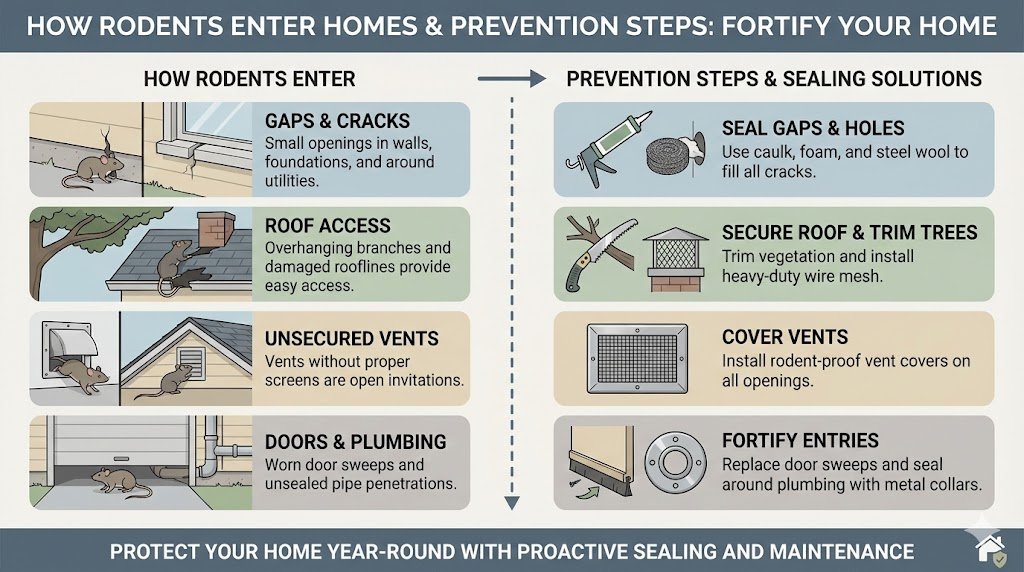
Frequent entry methods of rodents into your house.
Small holes and cracks on the exterior.
Mice also fit through openings that are as small as a coin. Fissures around foundations, siding or brickwork are easy points of entry.
- Areas to inspect:
- wall joints
- foundation cracks
- gaps near utility lines
- damaged vents
Effective rodent entry prevention should include the closing of such areas.
Doors and garage openings
Doors that do not stretch come up with a small opening. The garage doors are the most prevalent places of entry due to the repeated use of the doors.
Look for:
- worn door sweeps
- uneven thresholds
- damaged weather stripping
The slightest gap is a welcome to rodents.
Roof and attic access points
Rodents are superb climbers. Most of them gain access through roofs instead of the ground.
Check for:
- broken roof tiles
- vents on the attics which are not covered with a mesh.
- openings near chimneys
- loopholes in overhangs of soffits and fascia boards.
Most of these infestations go undetected in the attic areas.
Penetrations in plumbing and utility.
A home can have small openings on pipes, cables and HVAC lines, which it enters. The areas are good sources of warm air leakage that the rodents like in colder seasons.
Long-term rodent entry is facilitated by proper sealing using strong materials.
Open vents and crawl spaces
The vents in a dryer, crawl space, and basement can serve as a direct way out to the inside in a case of broken or absent screens.
Covering with metal mesh bars is done to avoid intrusion but allow air to pass through.
Signs of rodents inside.
The program also makes it possible to prevent big infestations because of early detection. Watch for:
- noises made in wall or ceilings (scratching sounds).
- excrements beside food store sections.
- gnawed wires or packaging
- nesting materials such as shredded paper.
- bizarre pet actions by the walls.
When these signs are in place, there is need to combine 2 methods, one being the removal process and the other being rodent entry prevention.
The question of preventing rodents.
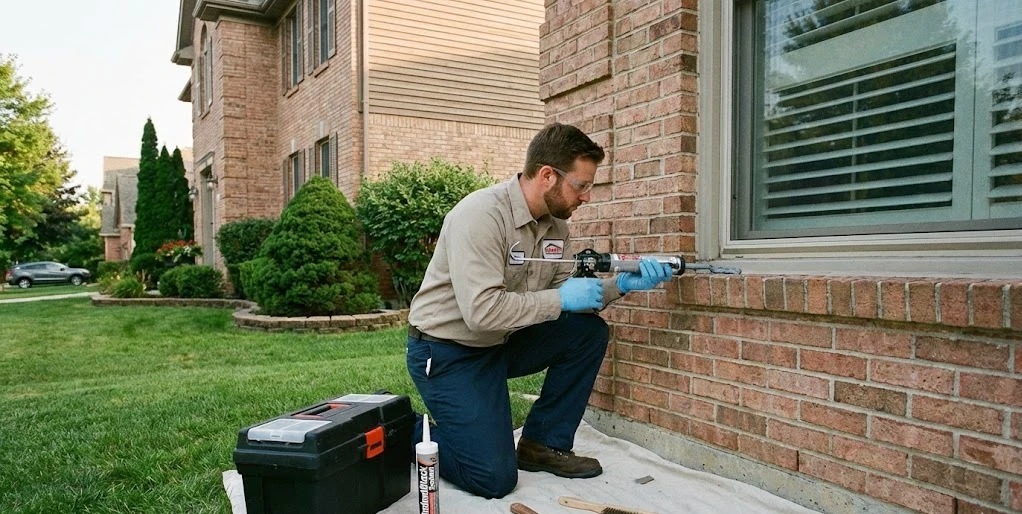
Seal every entry point
Use durable substances like:
- steel wool
- metal flashing
- caulk or expanding foam
- cement patch cement applied on foundations.
Do not use soft materials which can be chewed by rodents.
Remove outdoor attractants
Rodents tend to settle around houses prior to intrusion.
Reduce attraction by:
- disposing garbage in closed containers.
- cliptic vegetation around walls.
- keeping firewood elevated
- eliminating standing bodies of water.
These measures enhance the prevention of rodent-entry by decreasing the surrounding nesting spots.
Secure indoor food sources
Even crumbs are attracted by pests.
Best practices include:
- preservation of food in airtight containers.
- appliance cleaning on a regular basis.
- reducing the exposure of pets to the night.
- storing food in containers.
Coherence renders the house uninviting to rodents.
Improve home maintenance
The frequent checking of the inspections could ensure that small problems are not transformed into large points of entry.
Check:
- roof edges twice yearly
- foundation condition
- weather stripping on doors.
- vent covers and screens
One of the surest forms of rodent entry prevention includes maintenance.
Benefit from following and professional assistance.
The monitors and traps aided in the early detectability of activity. In case of repeated infestation, there are professional pest control services which can be able to detect the hidden points of access to the homeowner.
Reliable Pest Control & Home Protection by Koalaty Service
Keeping your home or business safe from pests requires professional care and long-term prevention strategies, and Koalaty Service delivers dependable solutions designed for lasting results. Offering residential and commercial pest control, termite prevention, mosquito treatments, wildlife removal, and home sealing services, their experienced team focuses on creating clean, healthy, and pest-free environments. With eco-friendly methods and years of industry expertise, Koalaty Service provides reliable protection tailored to your property’s needs. Learn more about their trusted pest control and home protection services by visiting KoalatyService, your partner for safe and effective pest management solutions.
High-risk home areas table
| Area | Why rodents target it | Prevention method |
| Kitchen | Food availability | Airtight storage and cleaning |
| Attic | Warm nesting space | Seal vents and roof gaps |
| Garage | Frequent openings | Install door sweeps |
| Basement | Moisture and darkness | Seal cracks and vents |
| Crawl space | Shelter and warmth | Add mesh barriers |
Rodent risk based on home conditions
| Home condition | Risk level | Action needed |
| Sealed structure | Low | Routine inspection |
| Minor gaps present | Medium | Seal entry points |
| Food exposure + gaps | High | Immediate prevention plan |
Common errors of homeowners.
- sealing only visible holes
- overlooking access points at the roof level.
- using traps solely and not shutting the entry points.
- abandoning outdoor rubbish to the walls.
- procrastinating repair services due to finding minor holes.
- Permanent outcomes need to be done away with visits and attraction.
Final thought
Problems of rodents seldom start overnight. They grow in the presence of small openings and food sources in which a pest can find a comfortable space within a home. Homeowners may attain permanent security by learning the entry points, security of your property and closing off vulnerabilities early. The best methods of keeping rodents out and ensuring a healthy and safe living environment are constant inspection and proactive maintenance.