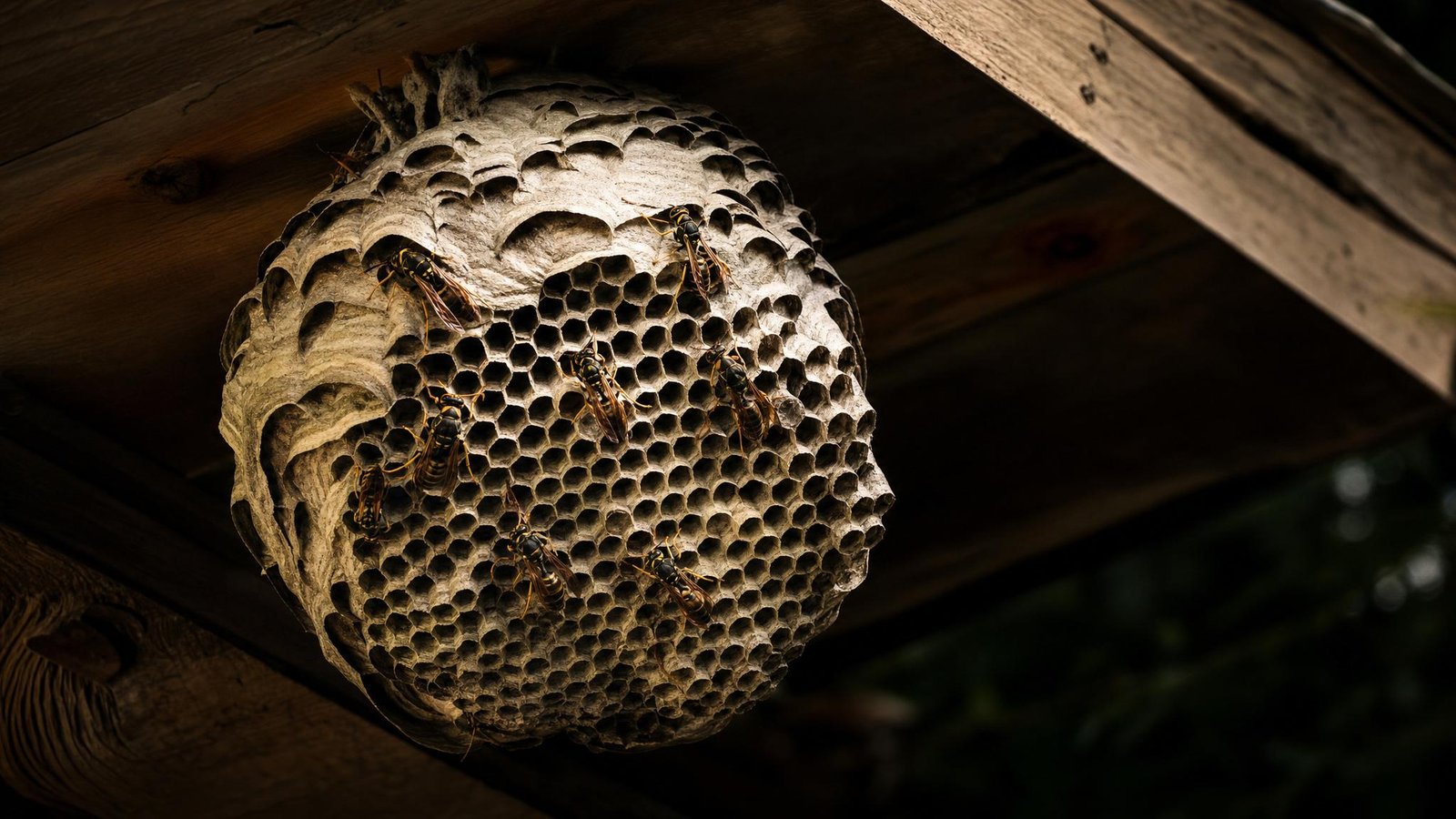
Wasps and hornets are among the most aggressive stinging insects in Oklahoma. As temperatures climb through June and July, their colonies hit peak population and their defensive behavior intensifies significantly. For Norman OK homeowners, this time of year brings a real risk of accidental nest disturbance and the painful, sometimes dangerous, attacks that follow. If you have found a nest on or near your property, professional removal is the safest route forward.
Koalaty Pest Control serves Norman OK and the surrounding OKC metro area with professional stinging pest treatment. This guide covers how to identify what you are dealing with, why summer is the most dangerous season for nests, and what the safe removal process actually looks like.
Identifying Wasps vs. Hornets in Norman Oklahoma
Not every stinging insect flying around your yard is the same. The treatment approach and urgency can differ based on what species you are dealing with, so identification matters before any action is taken.
Yellow Jackets are small, roughly half an inch long, with bright yellow and black banding. They are among the most aggressive species and will chase threats significant distances. Yellow jackets commonly nest underground in old rodent burrows, inside wall cavities, or beneath decks. These nests are particularly dangerous because they are easy to step on or disturb without realizing it. A single nest can hold several thousand workers by late summer.
Paper Wasps build the open-comb nests you commonly see hanging under eaves, deck rails, window frames, and garage door tracks. They have a slender profile with a narrow waist and are typically brownish or reddish with yellow markings. Paper wasps are generally less aggressive than yellow jackets but will sting repeatedly if their nest is threatened. Their nests are easier to spot than most, which is both a warning and an opportunity to address them before the colony grows.
Bald-Faced Hornets are large, black and white insects that construct enclosed paper nests in trees, shrubs, and occasionally on the side of structures. These nests can grow to the size of a football or larger by mid-summer. Bald-faced hornets are highly defensive and will attack in large numbers when their nest is disturbed. They are also capable of spraying venom toward the eyes of perceived threats, which sets them apart from most other species in terms of the risk they present during a removal attempt.
All three species are present in Norman and the broader OKC metro, and all three are capable of causing serious harm if removal is attempted without proper equipment and technique. Identifying which one you are dealing with helps determine the right response, but in every case, professional handling is the safest approach.
Why Summer Is Peak Wasp and Hornet Season
Oklahoma summers create ideal conditions for wasp and hornet colonies to reach maximum size. Colonies that began with a single overwintering queen in early spring have been building steadily since March and April. By the time June arrives, most established nests contain hundreds of workers. By July and August, large colonies can number in the thousands.
Heat also changes wasp behavior directly. As temperatures rise, wasps become more aggressive and harder to predict. A nest that seemed tolerant of nearby activity in May may respond with a full defensive swarm by July under the same conditions. This behavioral shift catches many homeowners off guard when they attempt to work near a nest they have left alone for months.
Late summer also triggers a second wave of activity. As colonies prepare for fall, queens produce male wasps and new queens in large numbers. This increases flight activity around nests and raises the tension level of the entire colony. Worker wasps become more irritable and less predictable during this phase, making late-summer nests some of the most dangerous of the year.
The combination of large colony size, heightened aggression, and increased activity makes June through September the most important window to address any nest that poses a risk to your household.
Dangers of DIY Wasp Nest Removal
The hardware store sells cans of wasp spray, and it is tempting to handle a visible nest yourself rather than calling a professional. In some limited cases, a very small paper wasp nest with fewer than a dozen workers might be manageable. But for most nest situations Norman homeowners encounter, DIY removal carries real risk.
Standard over-the-counter wasp sprays are designed for surface contact. They work well on exposed nests you can treat from a safe distance, but they have significant limitations. They do not penetrate underground nests or wall cavities. They do not kill the entire colony instantly, which means a partial treatment that disturbs the nest without eliminating it will trigger a defensive response before the spray has done its job. Workers that were away foraging when the spray was applied will return to a disrupted nest and will be agitated and defensive.
For underground yellow jacket nests, standard spray is often completely ineffective because you cannot reach the nest chambers without digging, and attempting to do so is extremely dangerous. Yellow jackets in disturbed underground nests will exit in large numbers within seconds.
Large bald-faced hornet nests in trees or on structures require protective gear that goes well beyond what most homeowners own. Attempting removal without full protective equipment, proper residual insecticides, and a clear escape route is a genuine safety risk. Multiple stings can cause serious allergic reactions even in people who have never shown sensitivity before, and anaphylaxis from stinging insects requires emergency medical treatment.
The two-attempt rule applies here in a practical sense as well. If your first attempt at removal failed or made the situation worse, the nest is now more agitated than it was before. A second unsuccessful attempt significantly increases the risk. At that point, professional treatment is the only safe option.
How Koalaty Safely Removes Wasp and Hornet Nests
Koalaty’s residential pest control approach to stinging pests starts with a proper inspection. We identify the species, locate the nest, assess access, and determine the correct treatment method before anything else happens. The right treatment for a paper wasp nest under an eave looks very different from the right treatment for a yellow jacket colony in a wall void.
For exposed nests, we use professional-grade residual insecticides that are significantly more effective than consumer products and that provide lasting protection against re-nesting in the same location. The application is made at the appropriate time of day to maximize contact with returning foragers and minimize the number of workers still outside the nest during treatment.
For wall-cavity and underground nests, we use dust formulations or direct injection treatments that penetrate the nest chamber and reach the colony. This is not something consumer products are designed to do, and attempting it without the right materials and protective equipment creates serious risk of injury.
After the colony is eliminated, we remove the physical nest where access allows. Leaving an empty paper nest in place can attract other insects and provides no protection against a new queen establishing a colony in the same spot the following year. Entry points and nesting sites are also noted so you know where to focus any future prevention efforts.
We serve Norman, Edmond, Yukon, Mustang, Moore, Guthrie, and surrounding OKC metro communities. Our scheduling is flexible, and we can typically accommodate same-week appointments for active stinging pest situations.
Preventing Wasp Nests Around Your Norman Home
Once an existing nest has been addressed, there are practical steps you can take to reduce the likelihood of new colonies establishing on your property next season.
Seal gaps in soffits, fascia, and exterior walls each spring before queens begin looking for nest sites. Paper wasps and yellow jackets both use small openings to access wall voids and attic spaces. A thorough exterior inspection in early March, before the first warm days trigger queen activity, is the most cost-effective prevention step available. Learn more about common pests in Oklahoma to stay ahead of what to look for.
Check eaves, overhangs, and deck structures monthly during April and May. Finding a paper wasp nest when it is newly started and still very small is far easier to address than waiting until the colony is fully established. Early-season nests are also smaller, more isolated, and less defended.
Avoid leaving sweet drinks, fruit, or uncovered food outdoors. Wasps are strongly attracted to sugary substances, especially in late summer when natural food sources are less available. Open beverage containers are a frequent cause of accidental stings when wasps enter unnoticed.
Remove standing water and manage yard debris where possible. Yellow jackets use sheltered, semi-enclosed spaces for nesting, and a cluttered yard with lumber stacks, old equipment, or dense ground cover provides more potential sites than a well-maintained one.
For properties with a history of stinging pest activity, a preventive perimeter treatment in spring can reduce the number of queens that establish nests on your property. This is something Koalaty can include in an ongoing pest management plan.
Contact Koalaty for Wasp and Hornet Removal in Norman OK
Do not risk getting stung. Call Koalaty at (405) 543-3338 for fast wasp removal in Norman OK. Our team responds quickly to stinging pest situations throughout Norman and the OKC metro area. Whether you are dealing with paper wasps under your eaves, yellow jackets in the ground, or a large hornet nest in a tree near your patio, we have the equipment and experience to handle it safely.
Schedule your service online at koalatyservice.com or call us directly. We serve Norman, Edmond, Yukon, Mustang, Guthrie, Moore, and surrounding communities throughout central Oklahoma.